The Summer 2026 program will run from June through August. It will be largest MATS program to date with 120 fellows and 100 mentors. Fellows will be connected with mentors or organizational research groups, such as Anthropic's Alignment Science team, UK AISI, Redwood Research, ARC, and LawZero, to collaborate on a research project over the summer. Some fellows will be offered a 6+ month extension to continue this collaboration.
Applications are now open. Apply by June 7th.

Key dates for the application and admissions timeline
Applications typically open several months before the program begins. Applicants complete a multi-stage admissions process, beginning with a general application. Depending on the tracks, streams, and mentors they apply to, applicants may also complete additional evaluations such as interviews, work tests, coding assessments, or writing samples before final admissions decisions are made.
The main program is a 10 to 12 week full-time research fellowship. Fellows work closely with one or more mentors on independent research projects while participating in workshops, talks, office hours, and the broader MATS community. Research directions are developed collaboratively with mentors, with increasing independence throughout the program.
The extension phase typically begins approximately two weeks after the main program concludes. Fellows who demonstrate strong research potential during the main program may apply for a funded 6 to 12 month extension. Extension fellows continue developing independent research with ongoing mentorship and support, typically working from MATS offices or other approved research locations. In recent cohorts, roughly 80% of fellows who applied to the extension phase were accepted.
MATS aims to accelerate researchers who will:
MATS alumni have gone on to publish safety research, join alignment organizations, including Anthropic and MIRI, and found an alignment research lab. You can read more about MATS alumni here.
Each MATS stream brings together scholars and mentors around a shared research agenda. Streams vary in methodology and focus area, spanning topics such as interpretability, control, evaluations, governance, cybersecurity, and agent foundations.
I prefer a weekly meeting cadence of at least one research meeting per week, where we discuss results from the previous week and potential next steps, and just generally align ourselves on priorities and stay motivated. I'm also a fan of relatively few meetings, and much more support given asynchronously, so I can think carefully about my responses and help throughout the process.
I have a decent amount of experience on the technical side, and so in the past have had good experiences unblocking scholars when they were stuck on technical obstacles right away (e.g. low-level bugs like memory issues, taking a step back and thinking about alternative approaches, etc). For example, I'm a huge fan of impromptu pair programming sessions to debug things together, and I always learn new things from dropping into someone's workflow. I'm also happy to help clarify things conceptually and just brainstorm together. The two biggest bottlenecks in my experience have been 1) getting stuck on technical obstacles and 2) conceptually understanding the problem we're trying to solve.
I'm open to a wider variety of skillsets, but these would be a big plus:
I would be happy to suggest concrete project ideas and help with brainstorming topic choices, or help guide an existing project that the scholar is interested in. My preference is that the scholar picks a category that overlaps with an area I actively work on so that I can give effective high-level advice.
Implementing SL4/5 and searching for differentially defense-favored security tools.
I love asynchronous collaboration and I'm happy to provide frequent small directional feedback, or do thorough reviews of your work with a bit more lead time. A typical week should look like either trying out a new angle on a problem, or making meaningful progress towards productionizing an existing approach.
Essential:
Preferred:
Mentor(s) will talk through project ideas with scholar, or scholar will pick from a list of projects.
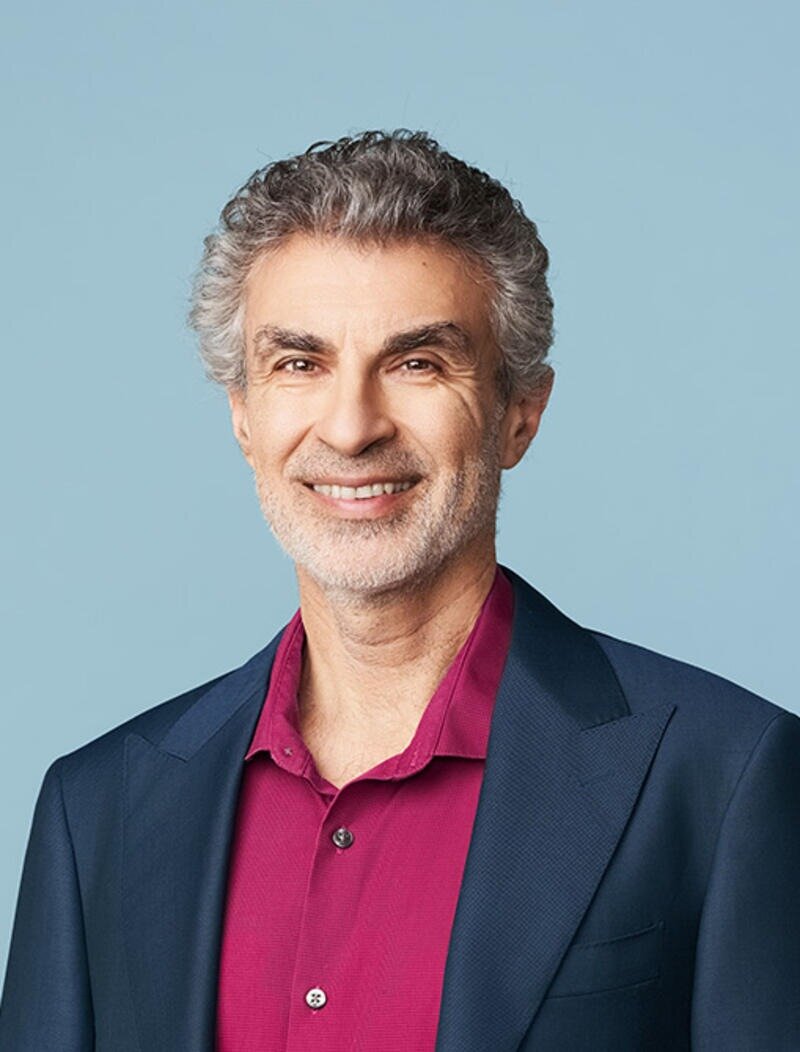
This stream will pursue research on securing and hardening AI systems through rigorous testing, provable defenses, and formal specification, including improving benchmarks for agentic security, scaling mathematically-grounded robustness techniques like randomized smoothing and Lipschitz-constrained training, and developing formal methods for specifying safe agent behaviors.
Programming experience, some experience with using AI based systems and mathematical maturity would be great for all the projects.
Beyond that, if someone has prior experience with building AI benchmarks, red teaming, formal methods etc. that would be great too.
We are excited to supervise projects that fall within the two following categories:
For 1., we are particularly interested in:
For 2., we are especially interested in:
Essential knowledge:
Essential experience:
Desired experience:
Bonus:
Lee's stream will focus primarily on improving mechanistic interpretability methods for reverse-engineering neural networks.
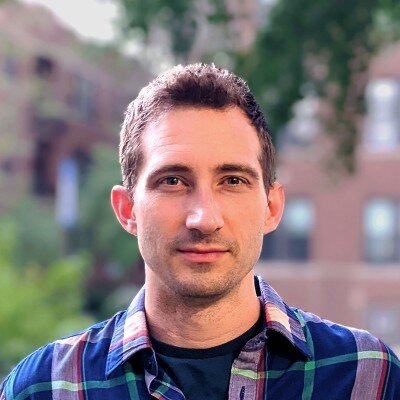
Mentorship looks like a 1 h weekly meeting by default with approximately daily slack messages in between. Usually these meetings are just for updates about how the project is going, where I’ll provide some input and steering if necessary and desired. If there are urgent bottlenecks I’m more than happy to meet in between the weekly interval or respond on slack in (almost always) less than 24h. We'll often run daily standup meetings if timezones permit, but these are optional.
As an indicative guide (this is not a score sheet), in no particular order, I evaluate candidates according to:
In the past cohort I chose a diversity of candidates with varying strengths and I think this worked quite well. Some mentees were outstanding in particular dimensions, others were great all rounders.
In general I'd like projects in my stream to at least be informed by SPD if not build on it directly. Scholars and I will discuss projects and come to a consensus on what feels like a good direction. I will not tell scholars to work on a particular direction, since in my experience intrinsic motivation to work on a particular direction is important for producing good research.
This stream will work on projects that empirically assess national security threats of AI misuse (CBRN terrorism and cyberattacks) and improve dangerous capability evaluations. Threat modeling applicants should have a skeptical mindset, enjoy case study work, and be strong written communicators. Eval applicants should be able and excited to help demonstrate concepts like sandbagging elicitation gaps in an AI misuse context.
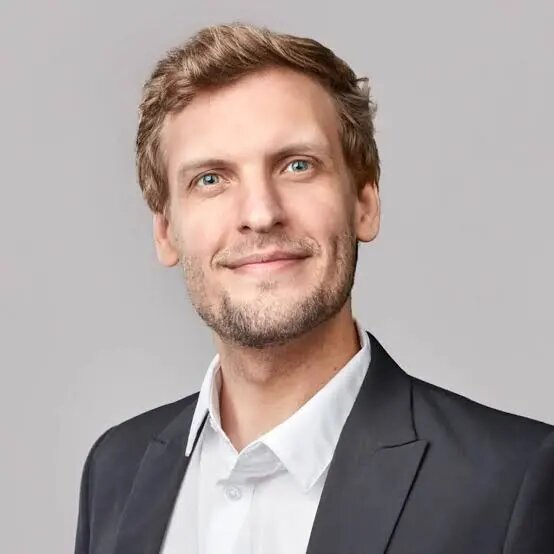
Typically, this would include weekly meetings, detailed comments on drafts, and asynchronous messaging.
For threat modeling work: Skeptical mindset, transparent reasoning, analytical
For evaluations, mitigations, and verification work: LLM engineering skills (e.g., agent orchestration), biosecurity knowledge
Mentor(s) will talk through project ideas with scholar
Priority directions:
I usually spend at least 30 min per week in one-one-one meetings with my mentees. We can also discuss longer time slots if necessary. Besides these time slots, I try to be as responsive as possible over Slack (>2 comprehensive responses per day) and read relevant papers between weekly meetings.
I'm looking for the following skills:
I would prefer to set the overall direction, but I will listen closely to scholars about their preferences within a broad direction. Converging on a particular topic is expected to be a collaborative process.
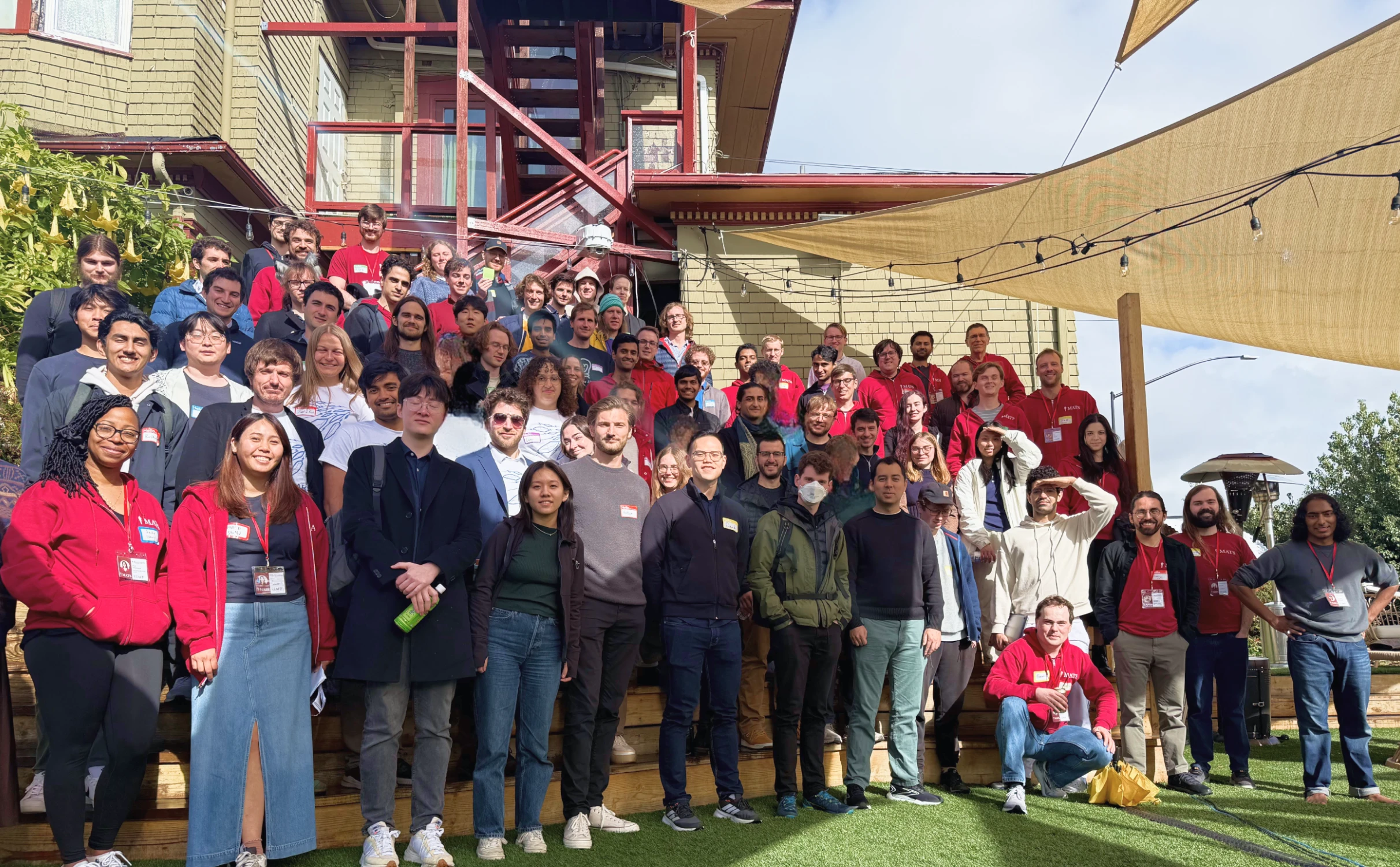
MATS Research phase provides scholars with a community of peers.

Scholars work out of a shared office and are supported by the Community Team.
MATS alumni report that the connections with peers that they made during MATS have had the largest impact on them years later. Our full-time Community Team works to facilitate these connections and also provide general well-being support. Weekly lightning talks, scholar-led discussion groups, game nights, and outings to SF are some examples of MATS events.