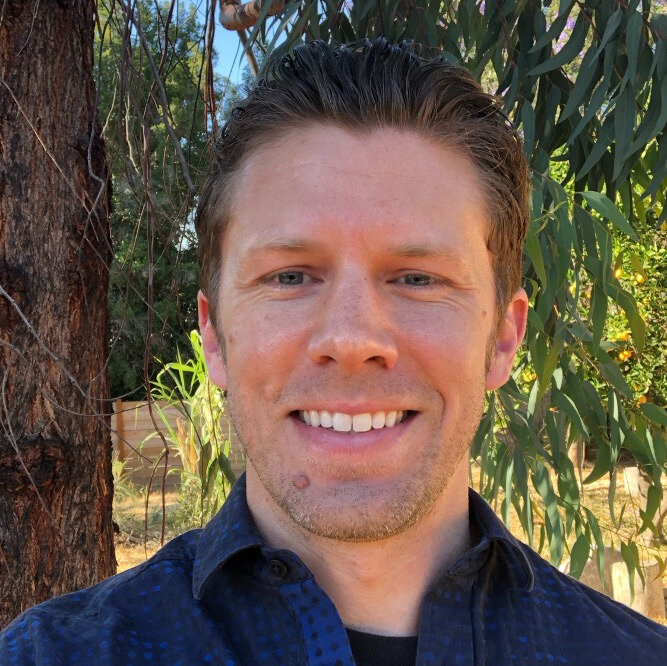

Gary Abel
Fourth Eon is developing adaptive, AI-native safeguards across the biotechnology stack, with a focus on function-based DNA synthesis screening. Fellows in this stream will work on technical research projects at the intersection of AI and biosecurity. Projects span topics like mechanistic interpretability of protein foundation models, bio model evaluations for biosecurity-relevant capabilities, and agentic sequence analysis workflows.
Stream overview
Fourth Eon is researching and developing adaptive, AI-native biological threat detection to improve the robustness of biosecurity safeguards throughout the biotechnology stack.
A core focus of our work is function-based screening of DNA synthesis. The following are a few examples of research projects that align with our research program, though I am open to exploring suggestions for project ideas from the applicants:
• Applying mechanistic interpretability techniques to protein foundation models to probe their learned representations of functionally meaningful biophysical and biochemical properties (e.g. local structure, surface charge, catalytic activity, solvation). The goal is to understand how semantic information is encoded in specific features and circuits for different models, and how to leverage them for reliable hazardous function prediction.
• Evaluating biological AI models for biosecurity-relevant capabilities, such as design of novel functional proteins, or biomolecular property prediction on non-natural genes and proteins.
• Developing agentic sequence analysis workflows for adaptive biosecurity screening. This project explores fine-tuning of AI agents for orchestrating computational biology tools and synthesizing the outputs to produce biosecurity risk assessments on unknown sequences.
San Diego
Mentors
Gary Abel is co-founder and Chief Scientist of Fourth Eon Biosecurity, where he leads research on adaptive safeguards and function-based screening. His expertise spans chemistry, molecular biophysics, biosecurity, and sequencing technology. He's spent nearly two decades studying how DNA, RNA, and proteins behave and interact. Gary is also a Contributing Scholar at the Johns Hopkins Center for Health Security, supporting the Center's work to understand and mitigate global catastrophic biological risks from advanced AI. He has previously mentored Research Fellows through SPAR, MATS, Cambridge ERA, and the Coefficient Giving CDTF. Gary holds a BS in Physics from San Jose State University and a PhD in Chemistry from the University of California, Merced.
Chris Ganje is co-founder and Executive Director of Fourth Eon Biosecurity, leading strategy, technology development and deployment. His career spans two decades at the intersection of frontier technology, public policy, and global security. Before Fourth Eon, he spent three years in private equity, having previously co-founded and scaled AMPLYFI, a venture-backed AI company working with defense agencies, and earlier led disruptive technology assessment and European energy technology policy at BP. He is a DARPA SWITCH Working Group Advisor, Innovate UK Council Member, Big if True Science Fellow at Renaissance Philanthropy, and Fellow at the University of Cambridge's Centre for Science and Policy. Chris holds a BA in History from SUNY New Paltz and an MSc in Politics from the University of Edinburgh.
Fellows we are looking for
Required:
• Prior technical research experience
• Strong critical thinking and creative problem-solving abilities
• The integrity and judgment to responsibly carry out sensitive research
• A good understanding of the basics of biomolecular sequence, structure, and function
• Expertise in one or more of the following domains:
bioinformatics, computational biology, structural biology, biochemistry, molecular biophysics, protein engineering, biosecurity, AI/ML, or a related field
• Proficiency with Python
Preferred:
• Hands-on experience with testing biological AI models
• Have built model evaluations / benchmarks
• Experience with mechanistic interpretability techniques
• Biosecurity context awareness
Project selection
Fellows who are interested in our research area should think of potential project ideas that leverage their strengths and interests. I will work with individual fellows to identify a specific project that matches their background and interests and is aligned with our overall research direction, and to refine the scope and objectives of the project.