MATS Winter 2027
The Winter 2027 program will run for 12 weeks, from January 19th to April 10th, in Berkeley, CA and London, UK, with remote options also available. Fellows will receive mentorship from world-class researchers at organizations like Anthropic, Google DeepMind, OpenAI, Redwood Research, and ARC, with the option to apply for a 6–12 month funded extension beyond the main program.
Applications are now closed.
Program phases
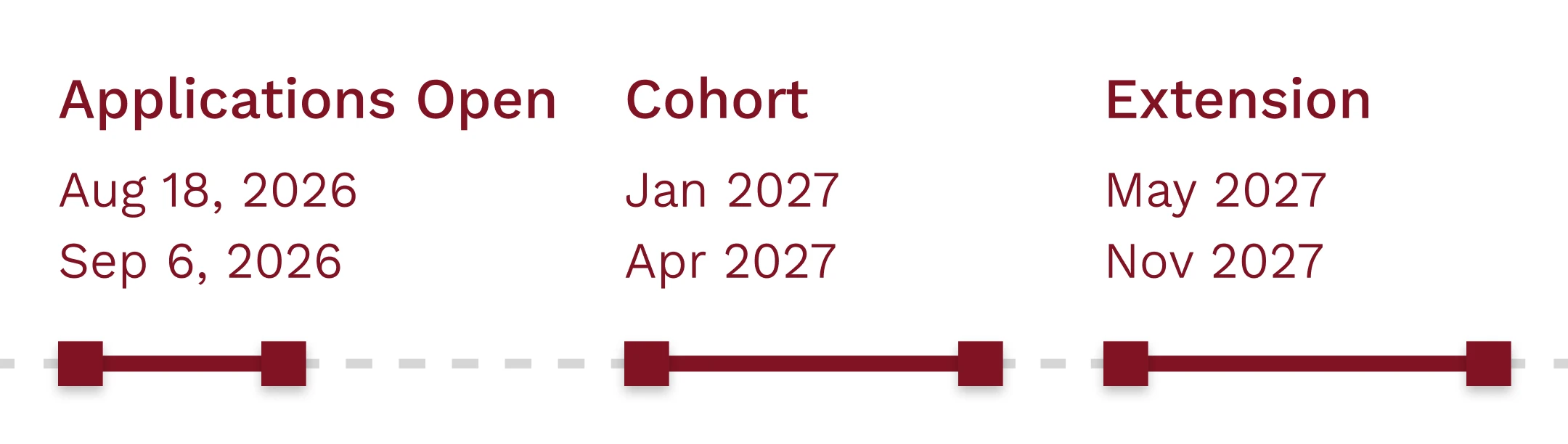
Key dates for the application and admissions timeline
Applications typically open several months before the program begins. Applicants complete a multi-stage admissions process, beginning with a general application. Depending on the tracks, streams, and mentors they apply to, applicants may also complete additional evaluations such as interviews, work tests, coding assessments, or writing samples before final admissions decisions are made. More information can be found on the apply page.
In Stage 1, applicants apply to one or more tracks (broad research areas): Empirical, Theory, Strategy & Forecasting, Policy & Governance, System Security, Biosecurity, and Founding & Field-Building. In Stage 2, advancing applicants choose specific streams within those tracks, each led by one or more mentors with their own research agenda. You can view this list below or as a grid here.
This stream is primarily focused on research into physical defenses against engineered pathogens, aiming to inform decisions about PPE stockpiling and distribution approaches, improve improvised PPE and bioshelter scale-up, and reach rapid conclusions on how much to prioritize other areas of physical biodefense (agriculture, emergency response, etc.). We are also open to strategic research into the use of bioweapons by AI or AI-human teams as part of takeover strategies and how this might inform preparedness.


This coalition of mentors make up the “Anthropic Stream”. This stream spans a range of empirical research areas in AI safety on LLMs, including AI control, scalable oversight, model organisms, model internals, model welfare, security, and more. You’ll be pitched, and have the option to pitch, a variety of safety research projects, and then be matched to projects and mentors based on your interests/preferences on research and what you’d like to get out of MATS. Fellows in this stream frequently receive funding and continued mentorship after MATS to complete their research project, usually leading to a (co-)first author paper. People in this stream often end up in long-term homes for safety research after MATS (e.g. Anthropic, Redwood Research, OpenAI).
Anthropic mentors share an application, tend to collaborate and co-mentor projects together, and generally share infrastructure to streamline the fellow experience. By applying to this stream, you are being considered for all of the Anthropic mentors.
We will continue working on black-box monitors for scheming in complex agentic settings, building on the success of the previous stream. Concretely, we will work on scaling our datasets and fine-tuning efforts, as described in the scalable monitoring agenda
Most likely the next projects will be about automated iterated red-team vs. blue-team games. We are currently training the blue team. We will then train the red-team and within this stream, we will try and close the loop to train them both synchronously.
This stream focuses on building a Science of Scheming, i.e. what are the mechanisms by which future models might become schemers, even though current models are not. We want to discover empirical Scaling Trends for Scheming. For example, does deceptive alignment become easier to discover with improved model capabilities?
Theory of change: Soon, most important work will be done by AI. AI is going to increasingly advise people and help with important things, many of which are time-sensitive and path dependent, e.g., work on alignment/safety (including various things like how LLMs should behave given that they’re very persuasive); how to think about acausal trade; how to organize society. It seems good for AI to do well at those things.
Of course, a lot of the relevant skills for doing well at these tasks are the same skills that cause AI risk and that AI companies work on (and are incentivized to work on) by default; like coding, some kinds of forecasting, etc.
We want to make models better at things that are net positive for the future, but that likely won’t benefit much from said default training (or perhaps will even be made worse by such training – e.g., via sycophancy).
In practice, a lot of the tasks that we’re interested in from this perspective are what we call “conceptual”: tasks that are hard to verify and don't have clear ground truth but where we nonetheless feel like we can make progress through argument and reason.
You can visit conceptualreasoning.ai to get a sense of our work to date.
We also take a keen interest in projects directly aimed at making future acausal interactions go well.

We aim to generalize tools for analyzing the dynamics of large-scale agency and power, such as public choice theory, to the setting in which machine minds are competitive with humans.

I currently lead the science of evaluation team at the AI Security Institute in London. I'm interested in topics around dangerous capability measurement, and understanding agent behaviours and goals, and their implications for policy.

This stream focuses on how advanced AI could enable new and dangerous bio technologies, and on assessing when risks become tractable or urgent as those capabilities arrive.
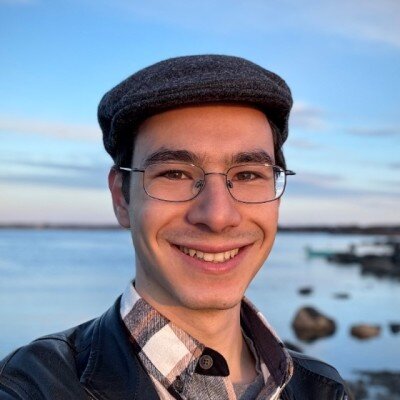
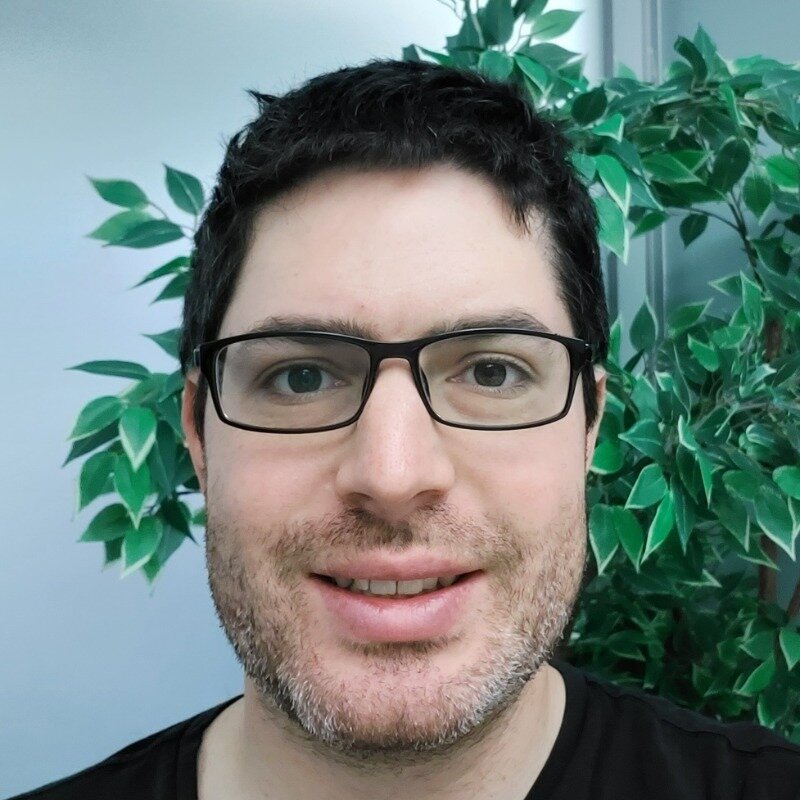
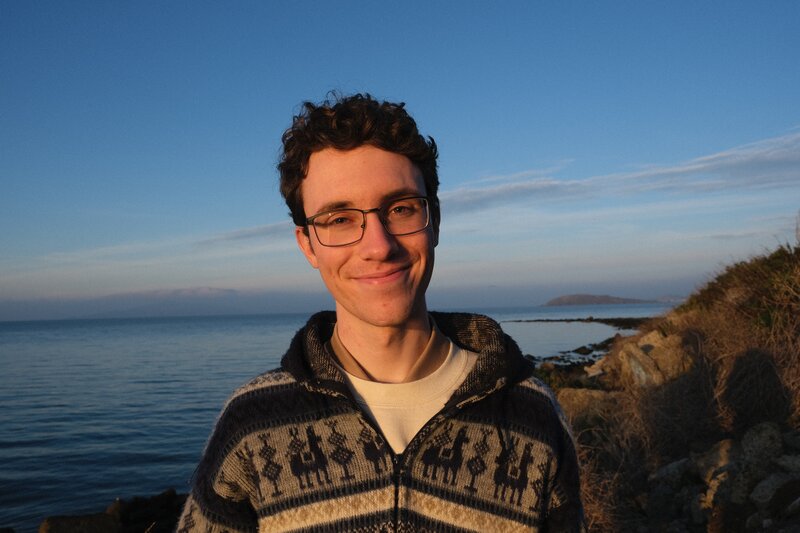
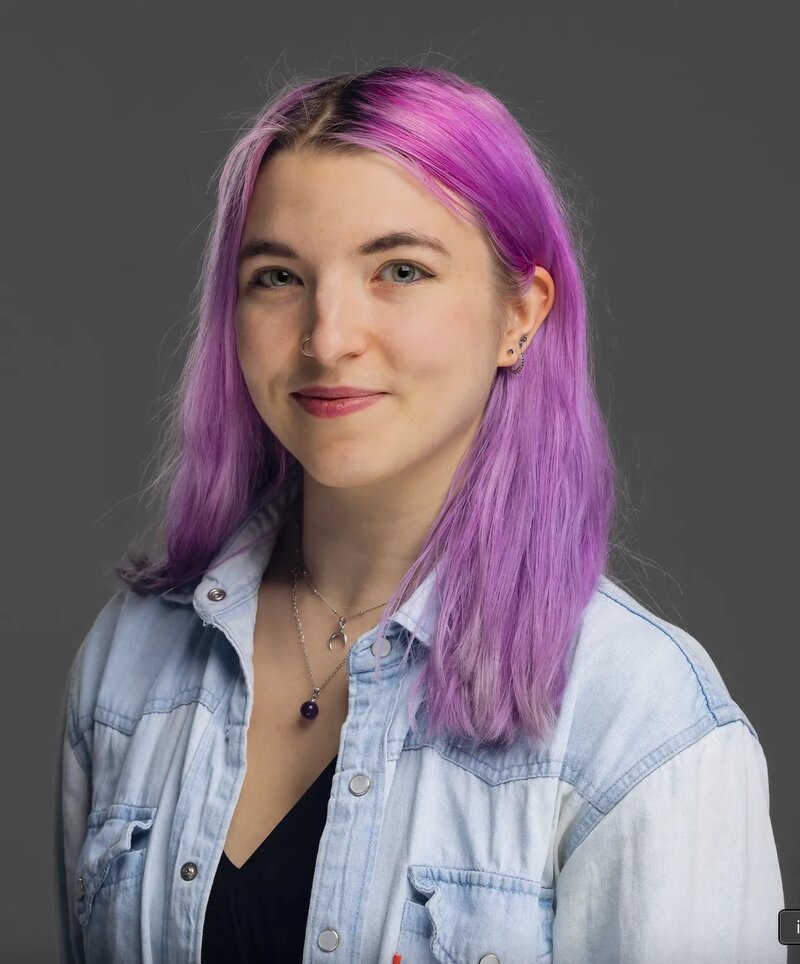
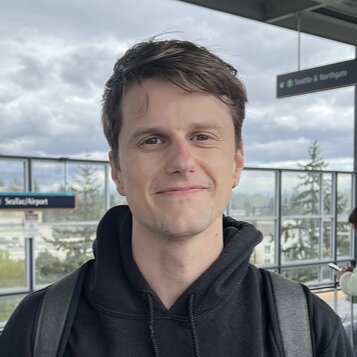
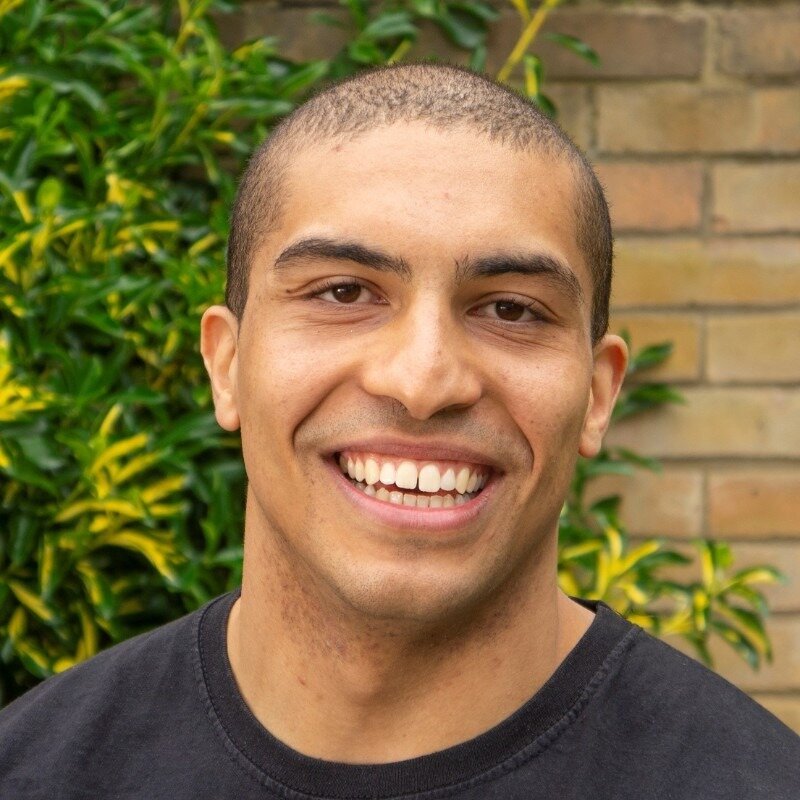
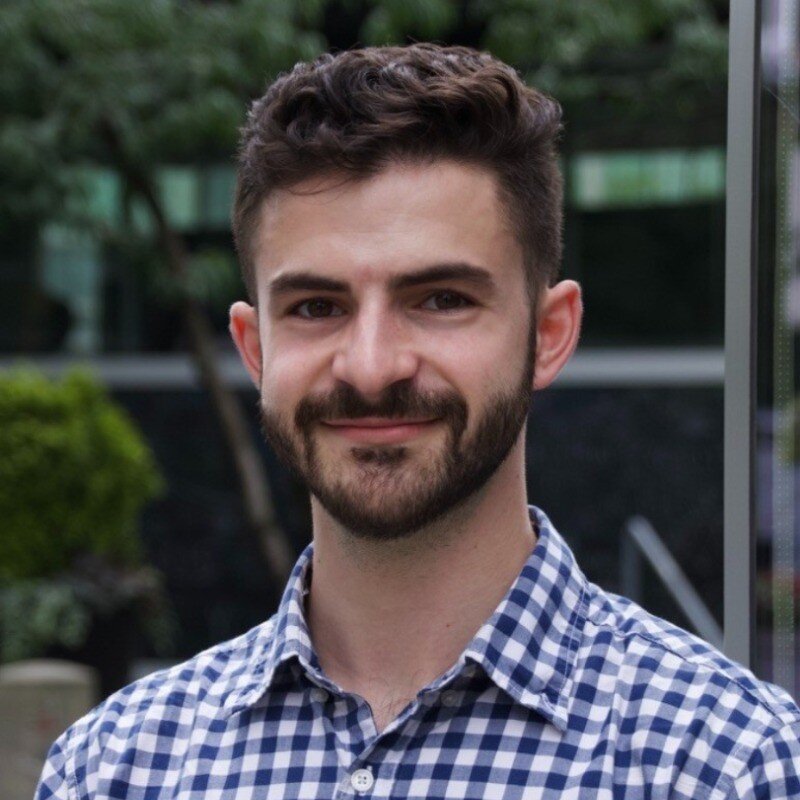
The MATS Program is supported by a diverse and highly respected group of mentors — top-tier researchers, engineers, and thinkers working across AI alignment, governance, interpretability, and security.






Application
What are the key dates for MATS Winter 2027?
The timeline for the MATS Winter 2027 program is:
- Application final deadline: September 6th, 2026
- Evaluations: September, October and early November
- Offers sent: Early to mid-November
- Program dates: January 19th to April 10th. The Winter 2027 Program has a time commitment of 40 hours per week over 12 weeks and takes place in-person in Berkeley, CA and London, UK. Remote or part-time participation is a possibility depending on your circumstances and mentor.
- Extension phase: Possible 6 or 12-month extension for select fellows after the 12-week program, starting in December.
What if I am accepted by multiple streams?
Based on stream rankings of applicants and applicant rankings of streams, a final matching process uses both sides' rankings to send out a single offer.
How long does the application process take?
Stage 1 applications open on August 18th and close on September 6th, end of day anywhere on Earth. Offers go out in early to mid-November, and the program starts on January 19th.
Finances
What does “financial support” concretely entail?
MATS provides a stipend of $1600 per week for participation in the main program ($19,200 for the full 12-week program). Scholars who are participating and performing research for less than 40 hours/week and/or for less than 12 weeks will receive stipends proportional to their level of participation.
Separately from this stipend, MATS will provide scholars with travel to and from Berkeley or London, housing, office space, and lunch and dinner on weekdays.
Do I have to pay taxes on the grant I receive for the MATS Program?
MATS participants may have to pay taxes on their grants based on the rules of the countries in which they are a resident for tax purposes. The grants should be regarded as private grants from a non-profit entity provided to individuals for the purpose of independent research and participation in a US-based educational seminar program.