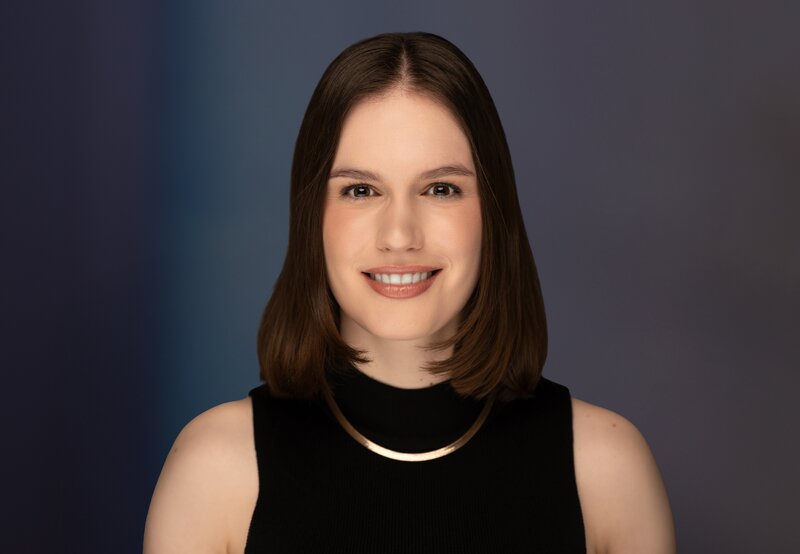
Janika Schmitt
This stream focuses on physical access controls for biotech governance: live pathogen repositories, CROs, cloud labs, cell-free expression systems, plasmid vendors, or secondhand lab equipment.
On high-conviction areas, you'll tackle specific open research questions and assess interventions; on exploratory areas, you'll conduct deep dives to determine whether they're worth pursuing. Your findings will directly shape Sentinel's grantmaking strategy and provide strategic guidance to the broader biosecurity community.
Stream overview
Sentinel Bio is undertaking a research effort to identify promising access controls (“chokepoints”) for biotechnology governance beyond nucleic acid synthesis screening. We’re focusing on critical points where access controls could make it substantially harder for bad actors to succeed in creating a pandemic-capable threat.
We already evaluated more than 200 alternative chokepoints across the biotech supply network. We ruled out most because they were too hard to monitor or control, too easily substituted, or too costly to legitimate users relative to the security benefit (https://sentinelbio.org/why-were-doubling-down-on-synthesis-screening/). But we identified six promising options: live pathogen repositories (LPRs), cloud labs, contract research organizations (CROs), cell-free expression systems, plasmid vendors, and secondhand laboratory equipment.
The six potential chokepoints are at different stages of maturity, and we're now looking for different kinds of work on each:
Tier 1 — high-conviction chokepoints. We're convinced that LPRs, CROs, and cloud labs should be near-term funding priorities and are looking for more work on specific open research questions and interventions for how to secure them.
Tier 2 — exploratory chokepoints. We think cell-free expression, plasmid vendors, and secondhand equipment may plausibly matter, but we haven't investigated them in depth. We're looking for deep dives that tell us whether each is worth pursuing as a chokepoint. Your work would directly inform our prioritization: ideally, it either rules a surface out or gives us high confidence that it's worth investing in further.
We expect this research effort to shape Sentinel Bio’s strategy for our grantmaking and provide a strategic resource for the broader biosecurity community, including policymakers and other funders.
Mentors
Janika Schmitt is a Program Officer at Sentinel Bio, a philanthropic fund focused on biotechnology governance.
Previously, she was a Non-Resident Fellow at the Institute for Progress, conducted virology research for her medical doctorate at the University of Cambridge, and worked on pathogen early warning at MIT. She has held fellowships at the Johns Hopkins Center for Health Security, the German Center for Infection Research, and Foresight Institute.
Janika is a licensed physician in Germany and studied medicine in Heidelberg, Oxford, and at Charité Berlin.
Mentorship style
I'll hold a one-hour weekly check-in by default, with higher frequency during onboarding. I'm available via Slack with quick turnarounds on async messages, and you can schedule ad-hoc calls as needed.
If I bring on multiple fellows or external contractors, I'll add a weekly all-hands to make sure everyone has situational awareness.
Fellows we are looking for
Essential:
- Research autonomy and agenda-setting: We'll help provide specific open questions for each chokepoint, but you'll own how you answer them.
- Transparent reasoning: You explain your decisions clearly, e.g. methodology choices, uncertainties, and how you reached conclusions. This matters because your work directly informs Sentinel's strategy and the broader biosecurity community's prioritization.
Preferred:
- Domain expertise in biology/biosecurity: You have hands-on experience in at least one of these: wet-lab biology, microbiology, lab automation, or biotech supply chain.
- Specific chokepoint experience: Familiarity with cloud labs, CROs, live pathogen repositories, cell-free systems, plasmid synthesis, or lab equipment ecosystems is a plus.
- Technical writing and translation skills: You can synthesize complex technical findings for policymakers and other non-technical stakeholders.
Project selection
While fellows will have some flexibility in selecting the chokepoint they focus on (based on their background and interests), we've designed specific projects and open research questions for each chokepoint to shape their contributions.