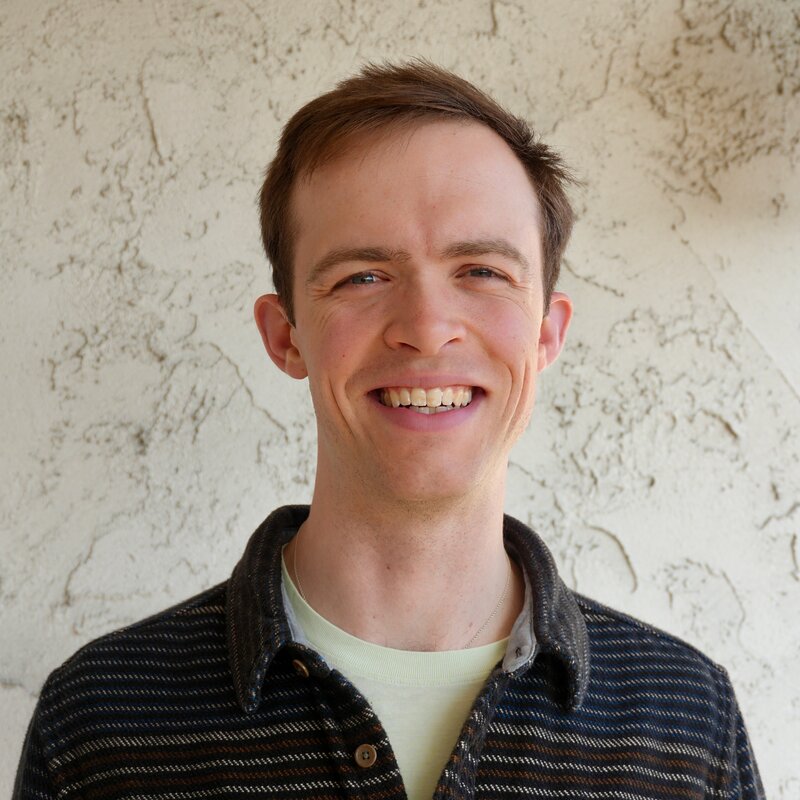
Nathan Lambert -- Character Training
This stream focuses on understanding model character in language model training dynamics, addressing questions around character reliability, scaled RL’s effects on character training, and how model character interacts with capabilities training. We plan on building a training-focused workstream to answer these questions, with a goal of building out the early, foundational research area on character training across ML, NLP, and safety fields.
Stream overview
I'm looking to mentor fellows who are excited about building out the empirical foundations of character training. A previous MATS project (https://arxiv.org/abs/2511.01689) set a foundation to build on; there are many possible directions to take the follow-on, including:
- Expanding character research to reasoning models
- Understanding how model character impacts agentic behaviors
- Building an evaluation that shows if an in-training model is learning to follow any given model spec. This can include studying training models to OpenAI/Anthropic's model specs.
- Model Spec Creation & Hill-Climbing: How do we design a spec and hill climb something like the eval above?
- General character training empirical work. I'm happiest when my mentee fellows are super excited. There's so much to learn, so I'm open to proposals!
High-touch (+2 hours of weekly 1:1s)
Boston
Indifferent
Weak preference
Mentors
Nathan Lambert is the founder of a stealth AI lab and currently writing Interconnects AI, a well read technical newsletter on AI models and research. He was recently a Senior Research Scientist and post-training lead at the Allen Institute for AI focusing on building open language models like Olmo. He works to increase transparency and understanding of current AI models and systems by building the open ecosystem.
Previously, he helped build an RLHF research team at HuggingFace. He received his PhD from the University of California, Berkeley working at the intersection of machine learning and robotics. He was advised by Professor Kristofer Pister in the Berkeley Autonomous Microsystems Lab and Roberto Calandra at Meta AI Research. He was lucky to intern at Facebook AI and DeepMind during his Ph.D. Nathan was awarded the UC Berkeley EECS Demetri Angelakos Memorial Achievement Award for Altruism for his efforts to better community norms.
Fellows we are looking for
Candidates should know the basics of LLMs and ML engineering, have strong communication skills, present very high motivation, demonstrate strong abilities in any field, have experience working with LLM agents to run some sort of experiment, and used some form of GPU environments / fine-tuning products before.
ML research experience is a plus, but not required. The best candidates can send a writeup or example of research experience (not necessarily a peer-reviewed, published paper).
Familiarity with HuggingFace and existing post-training techniques is a strong bonus. Examples include understand the Olmo post-training pipeline, recent model developments in the field, different currently relevant evaluations, etc.
This is my first time mentoring MATS, and I will likely end up giving a preference to more experienced candidates if am choosing between two otherwise similar candidates.