2026 年秋季项目为期 10 周,于 9 月 28 日至 12 月 4 日在美国加州伯克利和英国伦敦开展。研究员将接受顶尖研究人员以及 Anthropic、Google DeepMind、OpenAI、Redwood Research 和 ARC 等机构研究人员的指导,并可申请在主项目结束后继续参加 6 至 12 个月的带资助延长期。本届首次开设创业与领域建设方向和生物安全方向。
Applications are now closed.
Key dates for the application and admissions timeline
Applications typically open several months before the program begins. Applicants complete a multi-stage admissions process, beginning with a general application. Depending on the tracks, streams, and mentors they apply to, applicants may also complete additional evaluations such as interviews, work tests, coding assessments, or writing samples before final admissions decisions are made.
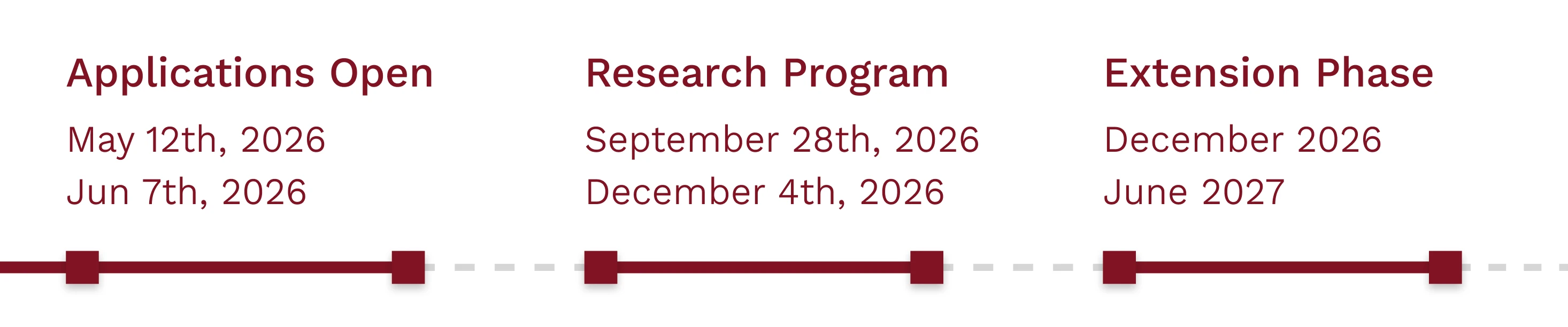
The main program is a 10 to 12 week full-time research fellowship. Fellows work closely with one or more mentors on independent research projects while participating in workshops, talks, office hours, and the broader MATS community. Research directions are developed collaboratively with mentors, with increasing independence throughout the program.
The extension phase typically begins approximately two weeks after the main program concludes. Fellows who demonstrate strong research potential during the main program may apply for a funded 6 to 12 month extension. Extension fellows continue developing independent research with ongoing mentorship and support, typically working from MATS offices or other approved research locations. In recent cohorts, roughly 80% of fellows who applied to the extension phase were accepted.
MATS aims to accelerate researchers who will:
MATS alumni have gone on to publish safety research, join alignment organizations, including Anthropic and MIRI, and found an alignment research lab. You can read more about MATS alumni here.
第一阶段,申请人可申请一个或多个研究方向:实证研究、理论、战略与预测、政策与治理、系统安全、生物安全,以及创业与领域建设。进入第二阶段后,申请人可选择这些方向下的具体研究流,每个研究流由一位或多位拥有各自研究议程的导师负责。你可以查看网格视图。
Junior grantmaking on Coefficient Giving's Technical AI Safety team ($150M+ in grants in 2025). Fellows will co-lead grant investigations, scope new active grantmaking projects (incl. founding new orgs), and help shape the team's strategy and future RFPs.
Active mentorship, similar to a regular manager relationship, with at least one 1-1 per week and async guidance.
You can find a full list of criteria in this document.
In short, we are looking for a combination of:
Fellows will work on a range of projects throughout the fellowship, and will work closely with their mentor to assign and execute on these projects. Fellows will have a comparable amount of freedom as a new grantmaker joining our team does.
我主要关注两个方向。
安全:
我希望设计并开展对真实 AI 部署的攻击演示,以展示其安全漏洞,推动企业投入资源采用能够解决根本安全问题的对齐技术。
基准测试:
进入后训练扩展时代后,我希望构建基准,衡量现代大语言模型技术究竟能否泛化。
我会根据项目相关兴趣安排一对一或小组会议。会议之外通过 Slack 沟通。
除项目初期外,我更倾向于安排多次短会,而不是一次长会。
遇到研究障碍时,即使不在会议期间,我也会提供帮助。
安全方向:
你应具备较强的安全意识,展现出创造性解决问题的意愿。我希望看到你愿意亲自动手,尝试测试多种不同系统。
基准测试方向:
你应尽可能富有创意,愿意深入细节、努力处理他人觉得枯燥的问题,并对旧金山湾区常见的兴趣话题以外的领域保持兴趣。
导师将与研究员讨论项目想法。
The stream focuses on evaluating and/or mitigating catastrophic risk emerging from dangerous scientific capabilities in frontier AI systems, with an emphasis on the challenges that emerge from lab integrations and novel science. Potential research directions include evaluation design, risk mitigations and evaluation science.
We can schedule a weekly 1h meeting, for general progress updates, sharing results, and overall guidance. I would be reachable on Slack as well for async comms. Happy to jump on ad-hoc calls for specific discussions or pair coding/debugging. I am based in London and I work UK hours (10am-7pm), but I also visit the US (Boston) a few times a year.
Essential
Preferred
Not a good fit:
I will work with the fellow to find the right project that suits their interest within the directions spelled out above. I will pitch a few project ideas and support the fellow in making the decision. I also welcome project suggestions; in those cases I would work with the fellow to scope it appropriately.
Founding ambitious AI safety and field-building projects.
Minimum support = 2x 30-min meetings per week. We could scale this up as appropriate.
I'll be based in SF. If the fellows want to work in BlueDot's office for some periods of time, I could collaborate with them daily.
I'm available for quick calls anytime, and am responsive on Slack.
I'm open to people with a wide range of backgrounds. Though you need to be willing to work very hard, be great at communicating, and have a burning desire to make AI go well.
I work best with people who are intense, communicate and reason clearly, and are mission-driven.
We'll work together to design the project. You'll have a lot of freedom to figure out what the best shape of thing to do is, and I'll provide lots of regular feedback and make relevant introductions to help you refine the proposal.
Your first 1-2 weeks will be focused on figuring out what to do, and the rest of the fellowship will be focused on execution.
This is the empirical research stream of Eleos AI Research. We’re dedicated to understanding and addressing the potential wellbeing and moral status of AI systems. We are open to fellows working on a broad range of topics, including LLM introspection, LLM preferences, persona vectors, and more, using either white-box or black-box interpretability techniques.
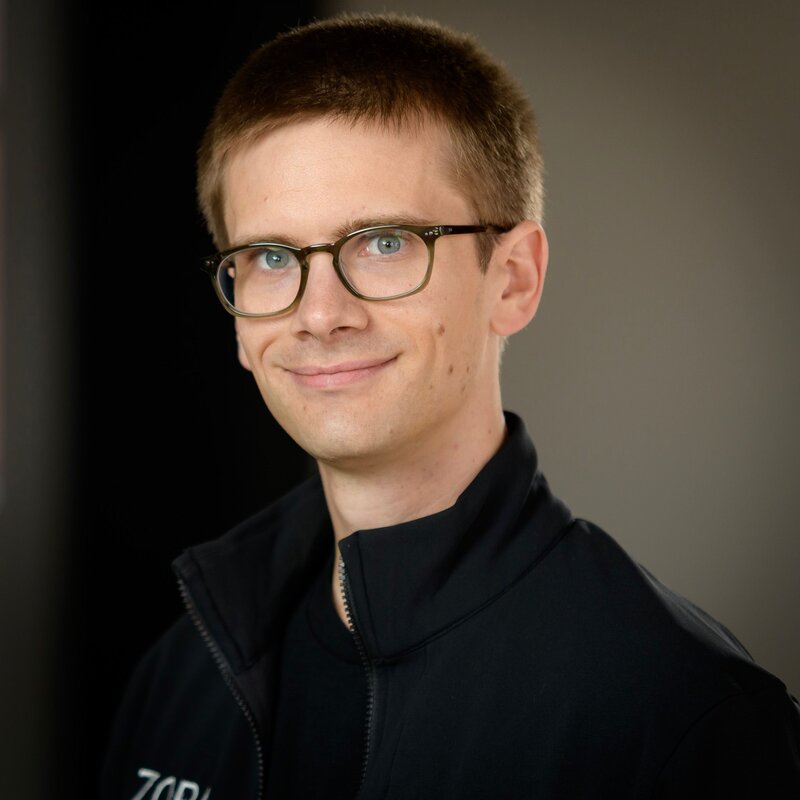
By default, we will meet in person for at least an hour per week. We’ll communicate regularly on Slack between meetings, and I will often be able to hop on brief calls on short-notice to discuss time-sensitive, blocking issues.
Essential:
Strong advantages, but not strictly required:
We’ll meet at the start of the program to discuss ideas for projects aligned with Eleos’s research priorities, including any ideas that fellows would like to pitch. We’ll work together to select a project that best fits each fellow’s goals and skills.
本研究流包含两个大方向的项目,旨在切实支持 SecureBio 当前的检测工作。第一个方向研究 AI 生物工具或通用 AI 工具在大规模宏基因组检测中的实际价值,包括算力成本、测序成本、模型类型与规模,以及工作流程各阶段之间的权衡。第二个方向探索将基因组语言模型用作新颖性检测器,例如使用类似困惑度的指标标记异常序列,并评估这一方法能否以合理成本提供灵敏、可解释的补充,配合传统生物信息学系统使用。
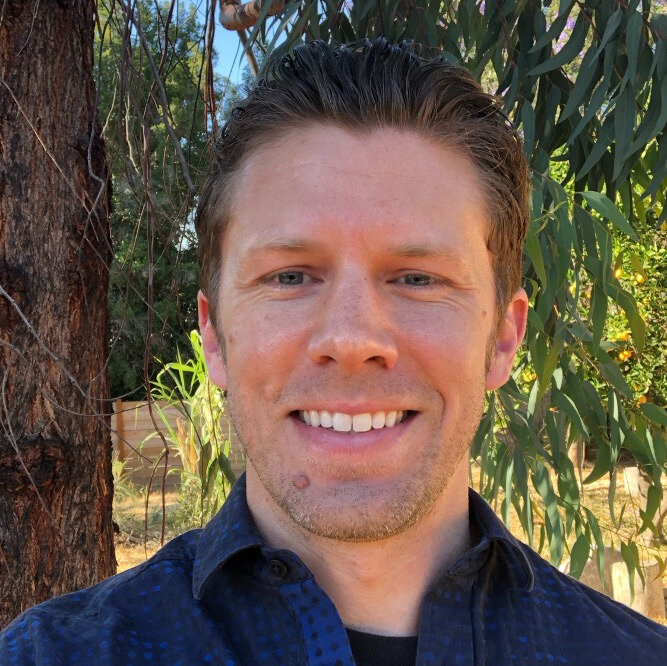
通常我们会每周安排约一小时的固定会议,讨论近期进展和下一步方向。我也会通过 Slack 快速交流想法、检查思路是否合理,并协助解决数据访问等阻碍;研究员需要自行负责实现、代码审查和调试等工作。
必备条件:
优先条件:
不太适合的情况:
我会根据 SecureBio Detection 的需求以及与我匹配的研究员情况,决定开展两个大方向中的哪一个。在选定方向内,我会根据自己认为对 SecureBio Detection 有帮助、有趣且相关的内容提供指导;研究员则有自主权,也需要主动负责具体工作方向的选择。
Fourth Eon is developing adaptive, AI-native safeguards across the biotechnology stack, with a focus on function-based DNA synthesis screening. Fellows in this stream will work on technical research projects at the intersection of AI and biosecurity. Projects span topics like mechanistic interpretability of protein foundation models, bio model evaluations for biosecurity-relevant capabilities, and agentic sequence analysis workflows.
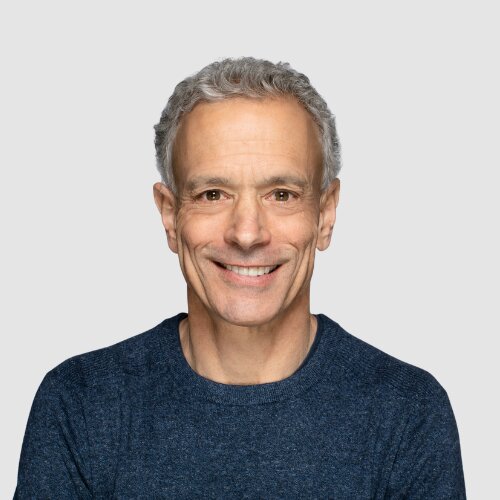
I typically schedule a standing weekly 1:1 meeting with each fellow, and also hold a weekly research group meeting. Beyond that I am available on Slack and can find additional time for calls outside of scheduled meetings.
Note that as part of our Safe and Responsible Research Framework we require fellows to sign a fellowship agreement covering confidentiality and pre-publication review for dual-use risks. This is common practice in biosecurity research and allows us to work freely together on sensitive material.
Required:
• Prior technical research experience
• Strong critical thinking and creative problem-solving abilities
• The integrity and judgment to responsibly carry out sensitive research
• A good understanding of the basics of biomolecular sequence, structure, and function
• Expertise in one or more of the following domains:
bioinformatics, computational biology, structural biology, biochemistry, molecular biophysics, protein engineering, biosecurity, AI/ML, or a related field
• Proficiency with Python
Preferred:
• Hands-on experience with testing biological AI models
• Have built model evaluations / benchmarks
• Experience with mechanistic interpretability techniques
• Biosecurity context awareness
Fellows who are interested in our research area should think of potential project ideas that leverage their strengths and interests. I will work with individual fellows to identify a specific project that matches their background and interests and is aligned with our overall research direction, and to refine the scope and objectives of the project.
We are looking for fellows with a significant background in the biological sciences and/or a founder's perspective to work on and support the Bio Action Plan.
We are looking for fellows with a significant background in the biological sciences and expertise in bio security would be a bonus. A knowledge of public health and pandemic preparedness would also be a bonus. An interest in and strong opinions on these things will be very helpful. I'm also looking for a fellow to take a founder's perspective towards building and organization which can be effective at turning a plan into a reality.
A track is a broad research area within MATS. Empirical, Theory, Strategy & Forecasting, Policy & Governance, Systems Security, Founder & Field-Building, and Biosecurity are our current tracks. Each track contains multiple streams. In Stage 1, you apply to tracks.
Streams are organized around a research agenda, led by one or more mentors who guide fellows through related projects. In Stage 2, applicants apply to streams within tracks based on research that interests them.
You may apply to as many tracks as you wish at Stage 1. At Stage 2, depending on which tracks you progress in, you may then apply to as many streams as you wish within those tracks; there is no cap. The process is comparable to applying to PhD supervisors.
We want to be flexible for applicants who have urgent prior commitments. Based on individual circumstances, we may be willing to alter the time commitment of the program and allow fellows to leave early or arrive late. Please inform us of your availability in the application process.
Applicants who will be 18 years or older before the program start date are eligible to apply. Both US and non-US citizens are eligible to apply. All backgrounds and levels of experience are welcome and prior AI safety experience is not required.
Yes. The 12-week program requires fellows to commit 40 hours per week to their MATS research. For exceptionally strong candidates with significant concurrent responsibilities, the time commitment can be reduced to 20 hours per week on a case-by-case review. However, the program maintains an expectation of sustained, high-level engagement, including regular participation in core activities and most organized events. Candidates that require a J1 visa to come to the US are unable to participate part time; they can only work part time if they participate remotely or from the UK.
Yes, upon submitting you will receive a link that lets you edit your response. Please note that you will not be able to edit your response once the application period ends.
LLMs may not be used to write any part of your application unless specific work tests or forms explicitly permit it. MATS monitors for LLM use, and applicants found to have used LLMs may be disqualified.
Depending on the evaluations of the tracks and streams you apply to in Stages 1 and 2, we will contact your references. We will send them a form with our own set of questions, so they will not have to prepare a reference letter.
Although MATS sometimes supports UC Berkeley-based mentors, MATS is an independent program and is not formally part of UC Berkeley. As such, MATS will not be providing student cards to our scholars.
The main program, or Research Phase, takes place in person in Berkeley, CA and London, UK. Historically, most fellows participate from Berkeley. London is typically chosen by fellows who want to co-locate with their mentor or who have a preference to work from the UK instead of US.Will this program be remote or in-person?
The main program, or the Research Phase takes place in Berkeley, CA and London, UK, with the majority of fellows participating from Berkeley. We strongly encourage in-person participation when possible, as a core part of the program experience comes from day-to-day interactions with your cohort and others in the broader AI safety ecosystem.
Decisions about remote participation are made on a case-by-case basis and depend primarily on mentor preferences, many of whom are open to the possibility, especially if you have family or other obligations that make in-person participation difficult. We strongly encourage in-person participation when possible, as a core part of the program experience comes from day-to-day interactions with your cohort and others in the broader AI safety ecosystem.
If you have difficulties in securing a visa to participate from Berkeley, we are likely to be able to support participation from our London office.The 6–12 month extension gives fellows the option to participate from Berkeley, London, or remotely.
MATS is a scientific and educational seminar and independent research program, and provides J1 visas for non-American participants. Participants can also opt to participate from our London office; however, please note that visa support is not available for that option.
During the main program, fellows should expect to meet with their mentor for at least one hour per week, with more frequent communication via Slack. The extent of mentor support will vary depending on the project and the mentor.
Fellows will also receive support from MATS’ Research Management team, who work with mentors by tracking scholar research progress, unblocking scholar research, and assisting with grant applications and deadlines.
Fellows develop as researchers by working with an experienced research mentor, interacting with other fellows, and receiving support from our Research Management team. Research managers meet weekly with most fellows and mentors and help with research strategy, research unblocking, and project coordination.
Other forms of training include workshops on different parts of the research process and seminars on a variety of AI technical safety and governance research.
Throughout the program, each fellow will work on an independent research project with input and guidance from your mentor(s). Depending on which stream you participate in, you may collaborate with other fellows in your stream.
Traditionally, fellows submit a Research Plan midway through the program and present their research at the Fellow Symposium at the end of the program.
We welcome feedback. For feedback for the whole team (visible by all MATS staff), please use this form. For feedback that will only be visible to the Co-Executive Directors, Ryan and Christian, please submit here.
You can contact the MATS Board of Directors using this linked form (responses are only viewable by the Board). Please only use this if you feel your question or concern requires board-level attention.