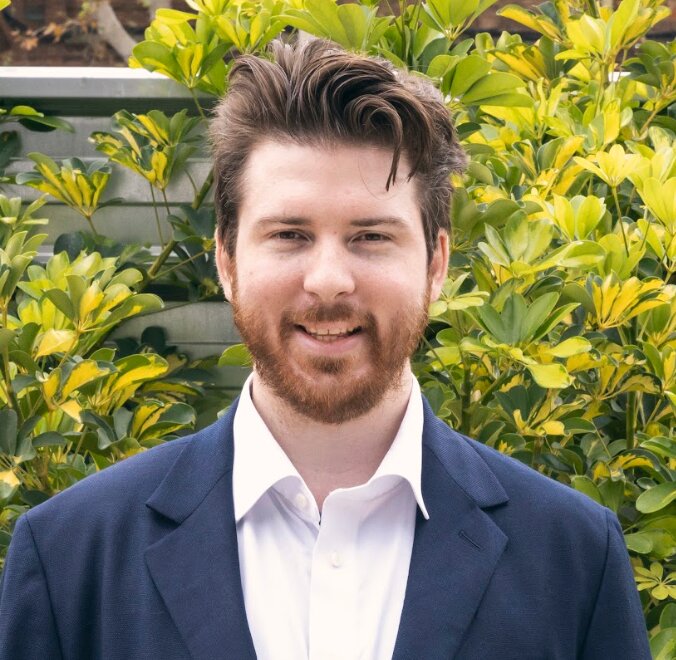
Peter Wildeford
I lead policy development at the AI Policy Network. We do advocacy around AI safety, especially in DC. I am hoping to get more help developing policy ideas for future policy windows.
Stream overview
I plan to pitch specific projects at the start of the program, especially as policy needs change rapidly, but here are some illustrative project ideas:
1. Suppose the President summons the AI CEOs and his top national security advisors to an emergency meeting at the White House. He has become extremely concerned about superintelligence. He is concerned humanity could become permanently out of the driver's seat of its own future. He wants to figure out what to do. What do we say? A fellow could take two or three questions (e.g., "what about China? how far ahead is China, actually?", "what could we verify in 30 days?"), produce best-guess answers with explicit confidence levels, red-team them, and deliver a decision memo plus a one-page options paper written for a principal.
2. An NTSB for AI incidents. When a plane goes down, the wreckage is preserved by law and investigators have subpoena power. When an AI goes rogue, the investigation runs at the pleasure of the company being investigated. A fellow could map NTSB, CSB, and FAA authorities and try to figure out what AI incident law could look like.
3. Model weight security policy. RAND has documented that no frontier AI company is currently secure against top-tier state attackers. A fellow could build the US government strategy for closing that gap.
4. AI control policy. Control — monitoring, tamper-resistant logging, containment tested against the model itself is a live technical research agenda with almost no policy translation. A fellow could turn these emerging technical standards into something the government could require.
Standard (1-2 hours of weekly 1:1s)
Washington, D.C.
No preference for this location
Weak preference
Mentors
Peter Wildeford is the Head of Policy at The AI Policy Network an organization building bipartisan support for policies that prepare America for AI superintelligence. He has spoken about AI on Good Morning America, the Daily Show, TIME, Politico, The Information, TechCrunch, and Transformer. Previously, he co-founded the Institute for AI Policy and Strategy and before that he was a data scientist and software engineer for five years. He is also a top-20 forecaster on Metaculus and has placed highly in multiple forecasting tournaments.
Fellows we are looking for
- Past experience writing in a non-academic context, especially memos or blog posts that are very readable by busy people.
- Some working knowledge of the frontier AI policy landscape (e.g., you know roughly what the compute supply chain looks like, what the current US executive actions are, what "recursive self-improvement" and "AI control" mean, and who the major players are.)
- You have self-direction and prior experience working on research independently.