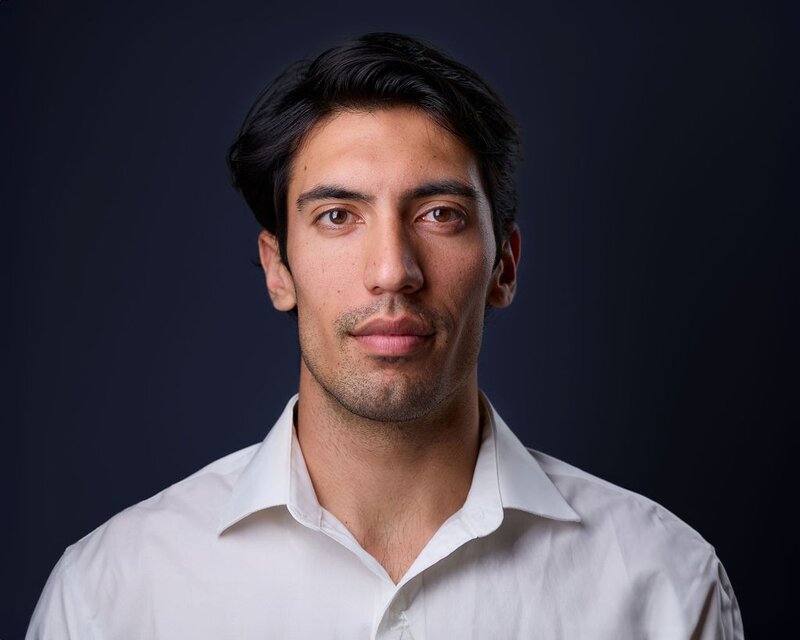
Mauricio Baker

This stream focuses on AI policy, especially technical governance topics. Tentative project options include: technical projects for verifying AI treaties, metascience for AI safety and governance, and proposals for tracking AI-caused job loss. Scholars can also propose their own projects.

Stream overview

In general, by default, projects will aim to publish an arXiv preprint and will ideally be (small) team projects. Below are several tentative project options. Scholars are also welcome to propose their own; we'd aim to find a project that all involved are excited about.

  • Technical projects for verifying AI treaties: As outlined in a forthcoming report, there are many technical open problems in verifying compliance with a hypothetical international agreement on AI. This project will aim to make progress on one such problem, to help enable international cooperation on AI. The following are several examples of more specific potential projects. (1) If an untrusted user trains an LLM on a compute cluster with trusted system software, verify that the model weights are in claimed memory locations. (2) Model, in detail, the relationship between a GPU’s MFU and its power use. (3) Check if ML workload code “egregiously” wastes substantial model FLOP without affecting results (distinct from having inefficient MFU).

  • Metascience for AI safety and governance: How can we effectively make progress on the many R&D challenges involved in AI safety and governance? These challenges include R&D for technical AI safety, security, evals, and verification. There has been significant academic study of R&D progress itself (i.e. metascience), but these insights don’t yet seem to have been applied to AI safety and governance. In this project, a team will review metascience research to develop recommendations for how policymakers and private funders can effectively advance R&D on AI safety and governance. For example, how do different funding structures, such as ARPAs, NSF grants, and advance market commitments compare?

  • Proposals for tracking AI’s impacts on jobs: Today, governments and the public have little visibility into the economic impacts of AI—perhaps mostly general economic statistics and anecdotes. This situation could potentially be improved, e.g. by large regular surveys. That could make the coming economic impacts of AI more foreseeable and manageable. If these impacts turn out to involve mass job loss, this foresight might also change government and public attitudes on AI acceleration. This project would develop concrete recommendations for tracking AI’s impacts on jobs, such as proposing a draft survey and budget to a well-suited organization.

Mentors

Mauricio Baker
RAND
,
Technical AI Policy Research Scientist, PhD student
Washington, D.C.
Compute Infrastructure, Policy & Governance, Security

Mauricio researches AI policy at RAND. His work has focused on AI hardware governance, especially export controls and verification of international agreements on AI. He’s more broadly interested in technical AI governance, and in studying policy options the field might be overlooking. Previously, Mauricio contracted with OpenAI and did a masters in Computer Science at Stanford University.

Mentorship style

We'll meet once or twice a week (~1 hr/wk total, as a team if it's a team project). I'm based in DC, so we'll meet remotely. I (Mauricio) will also be available for async discussion, career advising, and detailed feedback on research plans and drafts.

Representative papers

Scholars we are looking for

No hard requirements. Bonus points for research experience, AI safety and governance knowledge, writing and analytical reasoning skills, and experience relevant to specific projects.

Probably will work with scholars in the stream

Project selection

I'll talk through project ideas with scholar

Community at MATS

MATS Research phase provides scholars with a community of peers.

During the Research phase, scholars work out of a shared office, have shared housing, and are supported by a full-time Community Manager.

Working in a community of independent researchers gives scholars easy access to future collaborators, a deeper understanding of other alignment agendas, and a social network in the alignment community.

Previous MATS cohorts included regular lightning talks, scholar-led study groups on mechanistic interpretability and linear algebra, and hackathons. Other impromptu office events included group-jailbreaking Bing chat and exchanging hundreds of anonymous compliment notes.  Scholars organized social activities outside of work, including road trips to Yosemite, visits to San Francisco, and joining ACX meetups.