Active Site
This stream focuses on empirically measuring how frontier AI changes human capabilities in biology and the implications of it for biological risk. We’re particularly interested in real-world evaluations, understanding what drives AI-enabled uplift, and developing simulations or other proxies that can be validated against physical experiments and used to rapidly assess new models.
Stream overview
Example projects include:
Understanding what drives AI-enabled uplift: Analyze participant interactions and experimental data to understand where people succeed or fail, how factors such as elicitation skill affect outcomes, and which behaviors or interactions are most predictive of progress.
Modeling counterfactual participant performance: Combine data from our 2026 study with previous studies to model how participants might have performed if they had access to a different LLM or worked on a different task. A fellow could test how well these models predict held-out real-world outcomes and whether they can help anticipate the effects of new models or prioritize future human subject studies.
Building a wet-lab simulation calibrated to real-world data: Use data from real participant trajectories to develop an interactive, in silico version of a wet-lab study. A user (or agent) might choose an approach or experimental step and receive outcomes informed by what happened to comparable participants in the real world. The goal would be to build and validate a simulation that can be run quickly on new AI models as they are released in order to help track capabilities, forecast when meaningful increases in real-world uplift may occur, and identify which hypotheses to test in a physical laboratory.
I would also be excited to work with a fellow who identifies a different, high-value project with strong overlap with our goals and can make a compelling case for pursuing it. Other areas we are considering include evaluations of biological design tools, expert uplift, and AI-directed lab automation.
Light-touch (.5 hours of weekly 1:1s)
Indifferent
Indifferent
Mentors
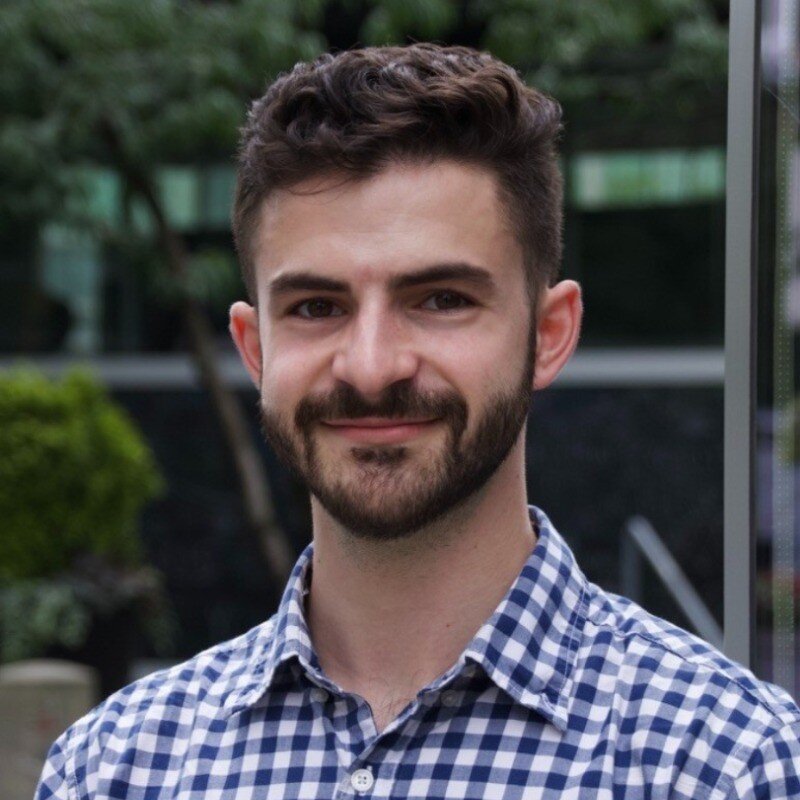
Alex Kleinman is a co-founder of Active Site. Previously, Kleinman worked on broad-spectrum vaccines at Alvea.
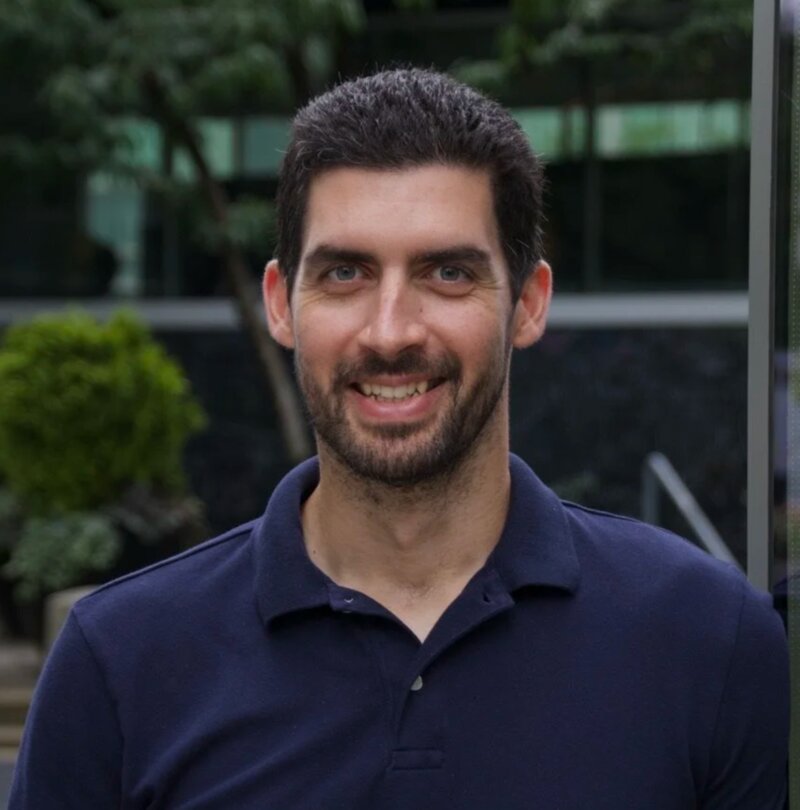
Joe Torres is the Executive Director of Active Site, a nonprofit research organization that studies biological risks from frontier technologies through real-world experiments. His current work focuses on AI-bio risk, including randomized controlled trials measuring how AI affects performance in the biology laboratory and studies of biological risk vulnerabilities. Before focusing on AI-bio risk, his work at Active Site included broad-spectrum antivirals and countermeasures for mirror biology. Joe holds a PhD in Molecular and Cell Biology from UMass Amherst.
Fellows we are looking for
- Research Independence. Has previously taken ownership of a research project and can make progress without frequent direction on what to do next.
- Research Focus. Ability to narrowly scope a larger question into a project that can produce a useful result during the program.
- Technical Skills. Has sufficient technical skill to perform the core work of the project.
- Operational Security and Information Hazard Awareness. Ability to recognize and appropriately handle sensitive information and research that may create information or attention hazards.
Project selection
I’m interested in mentoring fellows who can work independently and take ownership of an empirical AI-bio project, either one we have already identified or one they develop themselves that fits with Active Site’s research area. By the start of the program, I expect us to have a rich dataset from a new 2026 novice uplift study, including chat logs, weekly lab notebook entries, surveys, and task-level measures. This should create several opportunities for a fellow to make progress quickly.