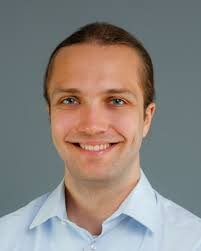
David Lindner
This stream will focus on monitoring, stress-testing safety methods, and evals, with a focus on risks from scheming AIs. Examples include (black-box) AI control techniques, white-box monitors (probes etc.), chain-of-thought monitoring/faithfulness, building evaluation environments, and stress-testing mitigations.
研究小组概览
I'm interested in detecting and mitigating deceptive alignment (mainly via capability evaluations and control). I'm interested in supervising projects in these areas:
- Developing capability evaluations for deceptive reasoning ability.
- Usefulness of externalized reasoning for oversight (CoT faithfulness by default, architectures promoting CoT faithfulness, monitoring of CoT)
- Control (primarily simulating control evaluations in different settings).
London
导师
我们希望招收的学员
I am looking for scholars with strong machine learning engineering skills, as well as a background in technical research. While I’ll provide weekly guidance on research, I expect scholars to be able to run experiments and decide on low-level details fairly independently most of the time. I’ll propose concrete projects to choose from, so you should not expect to work on your own research idea during MATS. I strongly encourage collaboration within the stream, so you should expect to work in teams of 2-3 scholars on a project, hence good communication and team skills are important.
项目遴选
We will most likely have a joint project selection phase, where we present a list of projects (with the option for scholars to iterate on them). Afterward, each project will have at least one main mentor, but we might also co-mentor some projects.